
Hope Takes a Historic Step: The ATL-001 Clinical Trial Begins in People Living With CEP
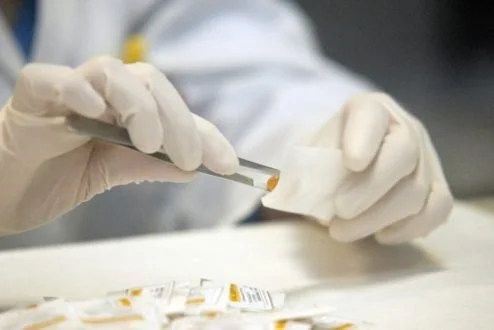
Atlas Molecular Pharma is launching a Phase 2 study of an investigational medicine designed to address the underlying cause of congenital erythropoietic porphyria (CEP).
For years, people living with CEP and their families have been waiting for a moment like this. Today, research takes a decisive step forward. ATL-001, an investigational medicine, is moving from healthy volunteers to people with CEP. It's tremendous news for patients, for caregivers, and for the entire porphyria community. At GPAC, we're celebrating it with hope.
What is CEP?
Congenital erythropoietic porphyria (CEP), also known as Günther's disease, is an ultra-rare porphyria inherited in an autosomal recessive pattern. It is caused by variants in the UROS gene, which carries the instructions for making uroporphyrinogen III synthase (UROS), a key enzyme in heme biosynthesis.
When this enzyme doesn't work well, porphyrins (mainly type I) build up in the bone marrow, the blood, and other tissues. In light, these porphyrins damage the skin. They cause blisters, scarring, and a photosensitivity that shapes everyday life. Some people also have hemolytic anemia. Severity varies widely from person to person.
Today, no approved medicine targets the cause of CEP directly. Current care focuses on protecting the skin from light and treating anemia. That's why this news matters so much.
What makes ATL-001 different?
ATL-001 is an oral formulation of ciclopirox developed by Atlas Molecular Pharma, a Basque biotech company linked to the CIC bioGUNE research center in Bilbao, Spain. It is described as a pharmacological chaperone: a molecule that helps the faulty UROS enzyme fold properly and stay stable, with the goal of restoring some of its activity. According to the company, it also acts as a mild iron chelator.
The difference lies in the approach. Rather than only easing symptoms, ATL-001 aims to work at the source of the problem: an enzyme that isn't doing its job as it should.
The medicine has already completed a Phase 1 study in healthy volunteers, with favorable safety and tolerability results. Now comes the next step: testing it in people with CEP.
How the trial will work?
The study is registered on ClinicalTrials.gov under the identifier NCT07024316. It will begin with three patients and plans to expand gradually to six. For the first 12 weeks, participants will receive a lower starting dose. They will then move to the full dose for another 36 weeks.
Hope, grounded in reality
A clinical trial can't guarantee that a medicine will prove effective or win approval. Still, it is the necessary path toward a treatment. And for the CEP community, which has waited years for an opportunity like this, it is a historic moment.
Behind this progress are years of rigorous science, dedicated research teams, and patients and families who never stopped asking for answers. At GPAC, we support patient associations around the world so that this information reaches the people who need it, clearly and from a reliable source.
This milestone belongs to all of us: people living with CEP, their caregivers, patient associations, medical teams, and the entire porphyria community.
How you can get involved
Share this news with your association, your family, and your medical team.
If you live with CEP, talk to your doctor about this study. Participation is always decided together with your medical team and the research team.
Join the GPAC CEP Patient Group. Our next meeting is on November 14! Dr. Óscar Millet of Atlas will join us to talk about the latest progress in the research and the study. Want to take part? Write to us at meme.carranca@gpac-porphyria.org.
